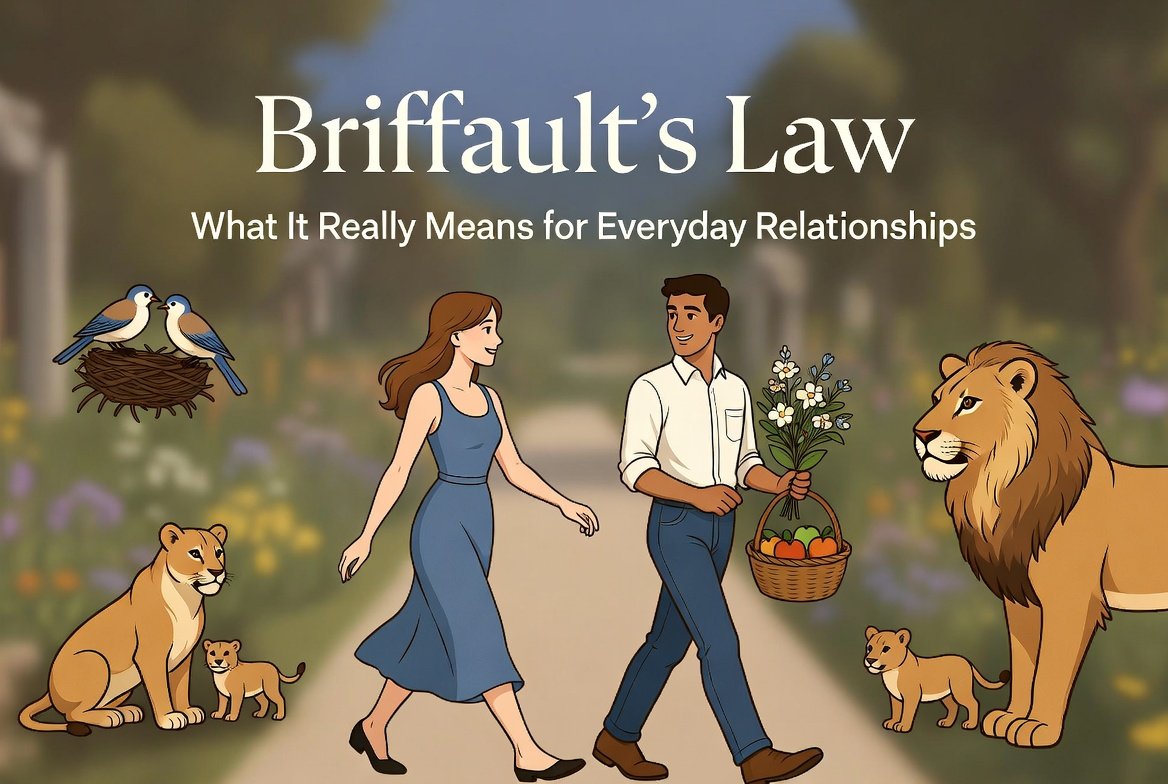
Have you ever noticed how some connections between people seem to depend on what one person gets out of it? Briffault’s Law offers a straightforward way to think about that idea. First stated back in the early 1900s, Briffault’s Law suggests that in many cases the female side sets the main rules for how a family or close bond works. Briffault’s Law basically says that if there is no real benefit for the female from linking up with the male, that link simply does not happen. People still talk about Briffault’s Law today because it feels easy to spot in daily life, from dating to long-term partnerships.
What Exactly Is Briffault’s Law?
At its heart, Briffault’s Law points out a simple pattern seen in nature and human bonds. Briffault’s Law explains that the female, not the male, decides the main conditions of any family-style group. Where the female can get nothing useful from being with the male, no such pair forms at all. This idea from Briffault’s Law is not about being harsh or one-sided. Instead, Briffault’s Law highlights how survival and comfort often guide choices. Think of it like this: Briffault’s Law reminds us that living things tend to stick together only when it makes life better for the one who carries the bigger load, such as raising young. Briffault’s Law does not claim every single case follows the rule perfectly, but it does show up often enough to make you pause and reflect.
Where Did Briffault’s Law Come From?
Briffault’s Law first appeared in a big study of early human societies and animal families written by Robert Briffault. He looked at how groups formed long ago and noticed a clear trend. Briffault’s Law grew out of his observations that mothers and their needs shaped the earliest social rules. Over time, people started calling this pattern Briffault’s Law because it captured something basic about how males and females interact. Briffault’s Law was not meant to spark arguments. It was simply an attempt to describe what Briffault saw across many cultures and species. Today, Briffault’s Law still gets mentioned when folks want a quick way to understand why certain relationships start or stop.
How Briffault’s Law Shows Up in Nature
Look at the animal world and Briffault’s Law becomes pretty clear. Many female birds or mammals only stay near a male if he brings food, protection, or help with the babies. If that help dries up, the association ends. Briffault’s Law fits right here because the female decides what stays and what goes based on the benefit she receives. Penguins, lions, and even some fish follow similar patterns under Briffault’s Law. The male might offer gifts or defense, but once the female sees no ongoing gain, she moves on. Briffault’s Law helps explain these behaviors without making them sound complicated. It is just nature’s way of keeping families going in tough conditions.
Applying Briffault’s Law to Human Connections
When we bring Briffault’s Law into our own lives, things get interesting. In dating or marriage, Briffault’s Law suggests a woman often weighs whether the relationship gives her emotional support, stability, or shared goals. If those benefits fade, the bond can weaken even if the man feels loyal. Briffault’s Law does not mean women are cold or calculating. It simply notes that people, like animals, tend to stay where they feel cared for and secure. Briffault’s Law also reminds men that past efforts alone may not keep things strong forever. Briffault’s Law encourages both sides to keep giving real value every day rather than relying on old promises. Many couples who understand Briffault’s Law say it helps them talk more openly about needs and expectations.
Three Practical Ideas That Flow from Briffault’s Law
Briffault’s Law comes with a few extra thoughts that make it even more useful. First, any good thing done yesterday does not automatically lock in tomorrow’s connection. Briffault’s Law teaches that yesterday’s help fades in importance if today brings no fresh benefit. Second, Briffault’s Law warns that a promise of future rewards after the benefit is already given often loses power fast. And third, Briffault’s Law shows that the longer someone waits for a promised gain, the less likely they are to stick around. These ideas from Briffault’s Law help explain why some partnerships feel one-sided over time. Keeping Briffault’s Law in mind can push people to focus on ongoing care instead of one-time gestures.
Why Briffault’s Law Still Matters in Today’s World
Modern life moves quickly, yet Briffault’s Law still rings true for many. With busy careers and changing family roles, people want relationships that add real value to their days. Briffault’s Law helps explain why some couples stay happy while others drift apart. Social media and dating apps make Briffault’s Law even more visible because choices happen faster than ever. Briffault’s Law does not judge anyone. It simply shines a light on patterns that have existed for a very long time. Understanding Briffault’s Law can make dating feel less mysterious and more honest. Friends, counselors, and even podcasters often bring up Briffault’s Law when discussing what keeps love alive.
Common Questions People Ask About Briffault’s Law
Does Briffault’s Law mean every woman thinks only of herself? Not at all. Briffault’s Law is about natural tendencies seen across species, not strict rules for individuals. Plenty of people build mutual, loving bonds that go beyond simple benefit. Briffault’s Law just notes that benefit often plays a big part in the beginning and staying power of a connection. Another question is whether Briffault’s Law works the same for everyone. Culture, personality, and personal values can change how strongly Briffault’s Law applies. Still, Briffault’s Law gives a useful lens for looking at why some relationships feel balanced and others do not.
Can Briffault’s Law Help You Build Stronger Bonds?
Yes, if you use it wisely. Briffault’s Law encourages both partners to keep showing up with care, respect, and real support. Instead of taking past kindness for granted, Briffault’s Law pushes you to create fresh reasons to stay together. Small daily actions—listening well, sharing chores, or planning fun dates—keep the benefit alive. Briffault’s Law also reminds singles to choose partners who naturally add to their life instead of hoping things will improve later. When both people keep Briffault’s Law in mind, relationships tend to feel fairer and last longer.
Looking Ahead with Briffault’s Law
Briffault’s Law is not a crystal ball, but it offers calm insight into how humans pair up. As society changes, Briffault’s Law stays relevant because the need for mutual benefit never really goes away. Whether you are single, dating, or married, thinking about Briffault’s Law can help you make kinder, clearer choices. Briffault’s Law does not have to feel negative. It can simply guide you toward relationships that work better for everyone involved. Next time you hear someone talk about why a couple split or stayed strong, you might find yourself nodding along because Briffault’s Law just explained it in plain words.
In the end, Briffault’s Law boils down to one gentle truth: lasting connections usually grow where both sides keep finding value. By paying attention to Briffault’s Law without overthinking it, anyone can build warmer, more honest relationships. Briffault’s Law is not the only idea out there, but it remains one of the simplest ways to understand the quiet forces that shape our closest ties.